Equal Playing Time: Should It Be the Rule, Not the Exception?

The Fifty Percent "Solution"?

One year, when my sons were playing travel soccer, they had a coach who I will calll Nick. The season consisted of eight games, one every Saturday afternoon. The policy of the Massachusetts Youth Soccer Association was for every child to play a minimum of fifty percent of each game.
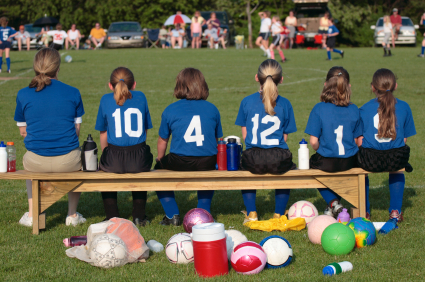
Seems fair enough, right? Think again. The way it worked on Nick's team was for six of the players (one of them his son) to play between seventy-five and one hundred percent of the game while the remaining twelve boys (including two of my sons) shared the remaining time. Sure, they all played fifty percent of each game, but thirty-five minutes, instead of the upwards of seventy the "favored six" played each week.

The Coach’s Favorite

One of the players seemed to get special consideration. Ricky was a strong, natural athlete: big, fast and tall. Yet, despite the fact that he had never played travel soccer, missed all but two of the team's sixteen weekday practices!! due to other sport team commitments, he never came out of the game! Ever!

The favoritism that Nick showed Ricky wasn't lost on the parents, many of who grumbled on the sidelines about how unfair it was that he was always playing.

Building Resentment

It wasn't lost on the players either. Most players were essentially sharing a position with another boy and by the end of the season, each had played the equivalent of four full games, while the "lucky" six had played almost eight full games. Yet, each family paid the full price for their sons to be on the team.

Since it is generally agreed that the more one plays, the better one tends to get, not only did playing the less developed players less than the more skilled and experienced players make it harder for them to catch up to the other boys, but, worse, it made being on the team less fun and tended to build resentment among the "have nots" towards the full time players which was clearly destructive of team chemistry and cohesion.

Playing, Not Winning, Should Come First

Dr. Milton Fujita, a California-based child-adolescent psychiatrist, has seen plenty of children harmed by participation in sports. "Organizing games for children is fine as long as it's organized so all the kids who want to play actually get to play,";he says. "When the whole issue of winning becomes primary, then participation suffers.. Winning is kind of inherent. You can't really de-emphasize it. But winning at all costs is something that needs to be looked at very seriously," says Fujita.


Equal playing time: Absolute or Within Certain Guidelines

I have the unique opportunity to discuss issues in sports and youth sports with a variety of individuals from all positions and viewpoints, some of whom have a good deal of experience as athletes, teachers, coaches, and parents of youth sports participants. Recently I was in a discussion with a mom/coach/teacher/parent who was frustrated over the absoluteness of their park districts rule that all must play equal time, no matter what.

The sport is baseball, the ages are around 10 to 12, and the rule is everyone sits 2 innings no more. Her frustrations center on the fact that several on the team she coaches miss practice regularly and are allowed the same playing time as the kids who never miss practice. In fact (as the rule stands) a kid could never come to practice, only come to games, and play just like everyone else.

Anyone that would like to weigh in on this, feel free?

Kirk Mango
Becoming a True Champion

RE: Playing Time...

I am a former collegiate athlete and have coach for 16 years at all levels from club and high school, to college and I am a mom of two kids that play different sports. Playing time is a tough challenge that every coach has to face, "Winning - vrses play time". I think the key for this is to get a clear understanding from the start as to what the league you are playing in stands for, the age of the athletes, and the outcome desired.

When coaching younger athletes, I think you need to keep the PCA (Positive Coaching Aliance) Double Goal coach perspecective. You want the athletes to learn to pay their best and the idea and strategies you teach are to aid them in the goal of winning. Younger players need equally fair play time, parents expect it, and the focus is on development. This should also be reflective of practice. As a parent you need to be aware of the fact that there are usually severl different leagues in an area and you can choose what level you feel your son or daughter is ready for. Some are “fun” and non-competitive, while others are more competitive, and as they get older they can actaully become ellite.

As athletes get older and push on in high school and CHOSE for themselves that they want to play on elite teams, then they need to agree to the rules of the game. When I coached elite club I ensured that everyone would play, I did not guarentee equality in all games, and did have rules for missing practice before a tournament. I as a coach I knew my team wanted to win, everyone on the team agreed to the goal of becoming the best team in the region and state. As a coach I knew that in tight matches I needed to keep my best team on the floor as the team as a whole would be disapointed if I had not. On the other hand I also knew I had to do my best as a coach to ensure that I was developing my weaker and more inexperienced players as at any moment, they could take over for a starter. So I played them more in games that were not as key and especially early in the tournements. Making sure as well to mix them in at times even in tight matches that may not be as key to tournement outcomes, as they needed experience under pressure as well. I also did a lot to prepare them in practice to face these stress situations, so that game time was easy - in practice all were treated equal!

That being said, I had a parent meeting up front and let all parents know where I was coming from out of the gate. They all signed parent forms agreeing to my policies along with the players -- this included practice schedules and rules for being late. I also had an open door policy with my parents in that they knew when they could arrange to talk with me in private about any situation or thoughts they might be having about their daughter - play or practice. I happened to be in a unique situation though as I started my own club, so I did not have a larger entity to answer to, although after my first year I had several other coaches join my club as they liked my philosphies and team success.

Play time absolute...NO, anytime a rule becomes absolute it has lost it's ability to govern it looses the intent of what it was set out to do. Play time should reflect commitment and effort in the younger ages - the parents need to sign the contract more so than the kids, as they cannot expect equal play if their kid does not practice- this sends the wrong message. The player needs to sign a contract about their efforts when at practice. A coach needs to have the savey of knowing as well when a player didn’t make it because of circumstance beyond their control and when a player didn’t make it because they oppted to go to the birthday party. Overkill on rules never wins.

For example, my duaghter played on a travel soccer team at age 9 and she never missed practice, she was on time to all games except one. I had to stay at the house to waite for a construction delivery in the early morning and could not take her until it arrived as I was the only one who could sign for it. As it turned out the delivery was late and we ended up being 5 minutes late to the 30 minute pregame warm up. To which the coach said he would not play her for the first half of the game! A rule is a rule he said.... ok... to me it was overkill... it in this instance he did not send a message to the player, nor the team, or to me. I was so upset I told him that in all my years of coaching I never punished a player for circumstances beyond their control, especially my daughters age. I thought it was so rediculous that I politely told him that if this was his stance, my daughter didn't need to be a part of his team and was ready to pull her out of the program at that point. So he was "enforcing the rules" but to me the rule didn't fit the situation.

So note to parente: Know the competition level fo the league you are putting your kid in, know the rules that your coach has about playing time – if you don’t agree with them don’t put your kid in the league. Most leagues are run by volunteers so know that they may not be paid professionals and may make a few mistakes as well.

Note to coaches: You have a tough job pleasing everyone and you will not be able to 100% of the time. The key is to do your best and have clear guidelines that you will follow and that your players and parents agree to before the issues come up. Know your athletes as well and talk to them about the situations, let them know when you don’t play them why (ie non practice) and what they can do to get more. If the problem is not with the player, but with the parent, you need to talk to the parent about the need to get their kid to practice. I always did a parent phone number exchange to help with carpooling. This helped out a lot as even the more challenged parents could connect and make for arrangements.

Note to athelte: Know what type of team you are playing on, ask the coach for their expectations and know the guidelines – and if your too young to care, make sure your parents do!

Great response Pam

Always like hearing your perspective.

Kirk Mango
Becoming a True Champion

Reward the dedicated players but honor the rules

When I coached I ran into many different situations or challenges when fielding a team for the game,, if certain players were not at the practice(s). The majority of parents and coaches whom I have discussed this situation with over the past twenty years agree that if there is a rule it is vital to the integrity of the program to honor the rule. However, good coaches can structure the game situation to reward the players who made the effort to be at the practice. I usually let the kids who were at the game choose their positions for the entire game first. I tried to work on the line ups with the team at the practice before hand. I also talked with the families of the absentee players -if it was a pattern to see why they were not there and I tried to do everything I could to help them show up. It is never a good idea to make any assumptions about why a child is absent but when they do not get to play their favorite position they quickly learn to become more dedicated. As coaches and parents of young athletes I alsways think it best to help them succeed and never to frustrate kids by punishment. Benching them is a certain way to turn them off to sports especially when it may be the only bright spot in their lives. Not showing up for a practice is many times out of a child's control in this day and age.


Brooke de Lench

Publisher

MomsTeam.com

Author:

Home Team Advantage: The Critical Role of Mothers in Youth Sports (Harper Collins 2006)

Good Solution, however...

For the instances where a child is missing due to unforeseen circumstances or parent’s negligence, which I would hope any quality coach would take into consideration, your suggested solutions would be great. The coaches I know and work with, including myself, would automatically do this. I would even go as far as stating that unforeseen circumstances would fall into the category of applying the rule of equal playing time as it stands. However, in today's society where there are parental attitudes that tend to lean toward immediate gratification, individual "wants" (selfishness), and don't seem to demonstrate some sort of commitment to what one choses to do, I am not sure those solutions hold the same value.

I am talking about kids being allowed to miss just because the young athlete had something better they wanted to do. Maybe 9 year old Johnny wanted to stay at the park and play rather than go to practice, or 14 year old Suzy had a sleep over she wanted to get to early, or 16 year old Mary had a birthday party she wanted to go to and rather then be a little late to the party she just skips practice.

In addition, there are individuals (more then many might think) who sign there young athlete up or let them try out for "everything." All of a sudden the poor kids plate is overflowing and there becomes big conflicts. Put kids like this on a team where the other half of that team never misses practice or games because the parents of those kids set parameters and help their kids set priorities and give all of them equal playing time as it was explained in my original post and in all likelihood there will be issues. It is a formula for animosity.

Do the same solutions apply in instances such as these?

Kirk Mango
Becoming a True Champion

The originator of my discussion asked if I would post this....

The teacher/coach/athlete/parent for whom I originally posted my comment about tried to make a post here and was unable to get it to take so she asked me if I would be willing to post her comment. Here is her comment:

Brooke,

I read your article about the frustration created when coaches are unfair. If all things are equal, it should never happen that a few kids get the playing time of 8 games and others kids only get the equivalence of 4. Which is exactly why I got involved in coaching my daughter’s softball team.

I was fortunate to have a history of athletics (I played on community teams as a child; I was a 4 year H.S. athlete and earned a college scholarship. I also coached H.S. athletics for 12 years before having kids of my own). I didn't get involved to have my daughter play more than other athletes. I got involved because I didn't want "any" child to have such an unfair experience.

Her first year playing softball, she had a great coach and a great experience! Her second year, she also played for a "so called Nick.” Although she was at every practice, she batted last or there about, usually played outfield, and sat 2 of the 6 innings every game.

The next year I was her coach. I kept track of who sat out, where they played and attendance. Every kid played in the infield and outfield every game. If they sat 2 innings this game, they only sat 1 inning next game. If they had to sit twice they only played outfield once. The batting order rotated down one each game, so everyone batted in every spot. It was more work on my part, but I thought I was being as fair as I could be. Parents were happy and we took first place. But was I really being fair?

My daughter was the only one with perfect attendance, and she had the most sit outs (even though they were all within 1 or 2). She missed several other commitments she would have liked to go to (birthday parties, her graduation from her church group, etc...) Things other kids went to. I know I'm teaching her valuable life lessons, but it's becoming more and more challenging when less and less parents are teaching those lessons.

This year I have one girl who will miss every weekend game, because their family goes to their summer home. There is another girl who will miss every week game, because she has an instrument conflict. There are several girls on the team who have missed practice. I blame the parents for not making the commitment. If they're late it's not usually the kid’s fault it's the parents. Why put your kid on a team, when you know they will only be able to make half the games? Why put your kid on a team, if you won't make the effort to get them there, and won't teach them what it means to be part of a team.

Every time someone doesn't show up, it makes it difficult to run plays in the game, when some of the kids don't know the plays, because they weren't at practice to learn the plays. The league rules say that playing time must be fair and equal. Yes, it can be manipulated a little, as suggested in the earlier article. The problem is, even if the kids who are at practice more and show a bigger commitment to the team, get a little more playing time, they are not getting better. Their level of play is stagnant, because they can't run plays and play the game as it should be played. So does that extra playing time help?

To be honest, I think it only frustrates them more. It's simple, don't join a team if you can't commit to it. Yes, it's just a game, but being part of a team at any age has many lessons. It means sacrifice and hard work. Things we should be teaching our kids. Ask corporate America one of the biggest problems, and many employers would say, "they don't know how to be part of a team". I wonder why?

It's unfortunate that we have all probably worked or played for the "Nick" coach, who is just unfair. My experience more often is that there are many people unwilling to make the commitment and sacrifice, and it's much easier to just blame coach "Nick.”

Of course it should be the

Of course it should be the rule. Everything in this life has to be in equal measures, especially playing time which is very important in everyone's life. 

Another perspective

Here is another perspective given by Stephen Brown (parent and youth coach) that describes a similar real world issue regarding the "everyone plays equal time" rule. It should add to our discussion here and I am looking forward to responses from others as to how they see and deal with situations like the following. Should we really support the idea of total equal playing time as an absolute in all sports? Are there exceptions? Does the age of the athlete have any bearing on how it should be applied - is it the same at 5, 10, 14, 16, 18 years old? Some things are not always as simple as they seem.

Here is the story:

"If we can start the discussion by making the assumption that the role of youth sports in each child's life is actually larger than the specific sport or skills themselves, then I believe that many of the rules in youth sports programs today are prohibiting coaches from maximizing the opportunity to help kids grow. It is clear that a very, very few will make a career playing some form of sport. The real benefit of sports programs at all levels is the lessons they can impart that will actually impact participants lives regardless of their chosen path.

"My concern is that rules designed to positively impact children are actually having a negative effect. Rules such as mandatory/equal playing time, a lack of practice attendance policies, continuous batting orders in little league, trophy/game ball presentation regardless of outcome and just the general 'as long as the kids have fun' mentality. While the intention behind such rules is good natured, they are making it more difficult for youth coaches to teach the life lessons through sport.

"An example of this happened this week on one of my little league teams. The young man involved is a very good player, probably the best on the team. He didn't get to start the game pitching and consequently had a negative attitude that was visible on his face, through his body language and the effort he put forth. When he was asked to pitch in the 3rd inning, he did not perform well and showed a poor effort. When the coaches talked to him, he expressed that he was upset he didn't get to start the game as the pitcher, instead playing shortstop. We explained that his obligation was to help the team in any way he was asked too and that no matter where he played, he had a responsibility to the other players to try his best. Showing no remorse or attempt to rebound, we removed him from the game after the third inning. We sat and talked to him on the bench about being a teammate, being selfless, sacrificing for the good of the team and he refused to make eye contact or even answer. After not playing him in the fourth inning due to his attitude, we again tried to talk to him and again to no avail....he was not responsive. This is where the dilemma begins. The league we participate in has a rule that each player may not sit on the bench for two consecutive innings, for any reason. Therefore, we had to play him again after he had openly demonstrated a disrespectful attitude. He got to play and it felt like our chance to reach him had been taken from us because of the playing time rule.

"At this point in the game, he did not deserve to take playing time away from the other kids who where giving it there all and maintaining a proper attitude. Not to mention the fact that the other kids were all aware of the problem and watched as there was very little consequence for his actions. Now the rule has not only limited the coaches ability to reach the child in question, but all of the other players are observing the behavior and the fact that there was no real consequence. We talked about the issue as a team, but its difficult to create a standard when there is no option to enforce it.

"Even though the league believes that the mandatory/equal playing time rule is benefitting kids, I contend that the rule prevented the coaches from having any chance to benefit that child. Its not the easy road, I know, but limiting the opportunity to teach life lessons through sport seems like exactly the opposite of what is in the best interest of the participants.

"The young man in question is 10 years old. Is that too young to begin to worry about issues such as attitude, respect, sacrifice, teamwork, etc? Does your opinion of the story change if the player is 15? Does your opinion change if the player is 7?

"I believe most involved in athletics would expect a 15 year old participant to display a proper attitude at all times. My worry is that not enough people are demanding it at 10 years old...which is producing more problems by the time they are 15. Difficult to create 15 year old athletes with the proper attitude if we haven't always expected it out of them! "

As we can see by this example, the issue is not winning the issue is appropriate behavior by a 15 year old athlete. This is good food for thought. Comments are welcomed.

Kirk Mango
Becoming a True Champion

PT

Kirk,

I couldn't agree more. As a coach myself, player selfishness is one thing that cannot be tolerated. Other kids see it and will copy the actions if not kept in check. I'm fortunate enough to have a 10 year old son who is pretty good in all the sports he plays. My wife and I have tried to instill in him leadership qualities. 10 years old is not too early for this. I don't know if there is an age that is too early to stress appropriate behavior.

It sounds like the kid in the above article was one of the team's better players. He pitched and he played shortstop. If he can get away with acting selfishly, others will try also. It's imperative that coaches can control this situation with playing time. We're in All-Star baseball season now. Some of the kids on the team have shown bad temper by stomping feet or slamming helmets after strikeouts. My son popped out in a game this weekend in a big spot. He returned to the dugout dejected and slammed his helmet. He had NEVER done this before. However, none of the coaches spoke to him (or the others who had been doing similar things) about it. I made it a point to talk to him after the game. He won't succeed every time. Slamming his helmet is a bad example for anyone and particullarly for him as a leader on the team. I think (hope) he got it.

If coaches don't react to this bad behavior, hopefully parents can step in and correct it.

Great comment

JIm,

Great comment. Keep a close eye on this discussion there are all kinds of points being brought out from several individuals. Also, you may want to check out the sister version of this post. Others have made different comments there and there are several links in that one you might find interesting in some of the posts. Here is the link: http://www.momsteam.com/node/2634

Kirk Mango
Becoming a True Champion

Equal Playing Time

I have been a youth and high school baseball coach for many years and I would have to say that almost ALL younger athletes (K-5th grade), regardless of the sport, should be allowed equal playing time. Too many kids develop at different ages, so everyone should be allowed to experience and learn the games that they love. Now.... The only thing that would sway my decision, even at that lower level, would be athlete attitude and commitment. They need to have a good attitude and a commitment to get better, otherwise they don't deserve equal playing time.
The sport that I really love is baseball, so I created a youth baseball web site that actually offers a downloadable baseball lineup rotation. Check it out at: http://www.my-youth-baseball.com/baseball-lineup-rotation.html
If you like the site, sign up for my free newsletter at: http://www.my-youth-baseball.com/youth-baseball-zone.html

Great comment

Brent, I noticed you said K-5th grade, what changes in 6th grade should be made and why? Are the more competitive aspects, level of commitment, responsibility, etc. something that is gradually introduced at this 6th grade point forward or earlier?

Kirk Mango
Becoming a True Champion

Good Question

In my experience, starting in 6th grade, things do get more competitive especially at the traveling level. I don't believe that traveling baseball players should be guaranteed equal playing time. If you are making the commitment to traveling baseball, you are making the commitment to more competition. That level is good for some of the better players. It is a choice they make. If you don't want that type of commitment, then you have a choice to stay at the house level.
Now... Don't take my comments wrong.... I do think there needs to be guaranteed amounts of playing time for youth traveling baseball leagues, but it doesn't need to be equal. All kids that make any team deserve a certain amount of playing time, but kids at the traveling level should not be guaranteed equal.
Does that make sense?
Thanks!
Brent
http://www.my-youth-baseball.com/youth-baseball-zone.html

Yep

Absolutely, I understood what you were saying in your original post. I am just trying to further the discussion based on others who visit momsteam. Talk to you soon and feel free to visit my websites below.

BOOK: http://becomingatruechampion.com/

BLOG: http://becomingatruechampion.blogspot.com/

Kirk Mango
Becoming a True Champion

Is that team still around?

Just another angle to give this thread.

What I see happening is that parents don't sign up and pay to watch their kids sit on the bench game after game. Kids don't join a team to sit on the bench either. What ultimately happens is that the kids/parent find something else to do. The old-time feeling of "being part of a team is good enough", just isn't good enough anymore!

These teams will eventually only retain their starters... and sometimes they'll lose their superstar talent to elite clubs and get a double whammy! Now they've lost their "fill-in's", their star left, and the team is done!Some parents and coaches are TOO concerned over where their team is placed and winning.

In my area, we have travel soccer and the travel leagues are broken down in flights. The lower the flight number, the better the teams. Everyone want to get into the top flights, and for some reason the others just aren't good enough...

This situation happened to one of our travel teams, not so much over playing time but the same idea applies.

Our travel teams allow a certain number of out-of-district players to be on each team. The coach found these inner-city kids who were absolutely phenomenal. With these three kids, they took that team to be one of the top in the state at the top flight. The coach though had his work out for him. The kids typically needed rides to and from practices, games, and what-not. The team cut kids within our district because "they weren't good enough." These kids found other travel teams to go to, although they were not as highly ranked. Fast forward two years, the team disbanded. All three superstars either got scooped up by the ODP program, MAPs, or lost interest.

It brings me to my question, what this for the kids? or the coach? I know some of those kids who were cut are still playing, our club could still have had a travel team at the bracket if the need to win and win at the elite level wasn't such a priority.