
Home » Health & Safety Channel » Hydration Safety Center » Heat Illnesses - Risks

Heat Illnesses - Risks

Exertional Sickling: Serious But Survivable If Prompt Action Taken

Yvette L. Coursey, DPA, talks about how sickle cell trait, ordinarily a relatively benign condition, can cause youth engaged in sustained, intense exercise to suffer a potentially life-threatening condition called exertional sickling. 

The risk of exertional sickling can be increased by such factors as environmental heat, dehydration, asthma, illness and newness to altitude increase the intensity of the activity 

Risk Factors for Exertional Heat Illness in Children and Teens

Most healthy children and adolescents can safely participate in outdoor sports and other physical activities in a wide range of challenging warm to hot weather, but there are numerous factors that put them at increased risk of exertional heat illness.

Exertional Sickling: Potentially Life-Threatening Condition for Youth with Sickle Cell Trait

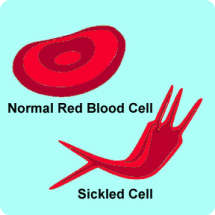
After birth every baby is tested for a wide variety of conditions and diseases. One of the tests looks for the condition called "Sickle Cell Trait."  Ordinarily, a relatively benign condition, sickle cell trait can have potentially devastating implications for youth  engaged in sustained, intense exercise, such as in sports practices, which can result in a life-threatening condition called exertional sickling.

Signs and Symptoms of Impending Heat Illness

Symptoms of impending heat illness include chills, nausea, headache, disorientation, and muscle cramping.

Football Players At Greater Risk of Heat Illness

According to the NCAA, over 100 football players died from heat stroke between 1960 and 2001. An August 2008 study by researchers at University of Florida says there are eight factors that make football players are especially vulnerable to heat illness.

Reducing Heat Illness Risk in Youth Football

Youth football coaches should adopt practice modifications and employ a strategy to acclimatize players to perform in the heat, along with a fluid replacement strategy in anticipation of young players who begin practice already dehydrated, according to new recommendations from the American College of Sports Medicine (ACSM), the world leader in the scientific and medical aspects of sports and exercise. The guidelines are outcomes from a recent expert panel convened for an ACSM scientific roundtable on youth football and heat stress.

Modify or Cancel Games or Practices In High Heat or Humidity

Extremely hot or humid weather may require that sports practices or games be modified or even cancelled because of the risk of heat illness. In deciding whether to do so, you should keep in mind that hot, dry weather can be extremely dangerous. Because sweat evaporates very quickly in such conditions, your child won't feel sweaty, and neither you nor your child may recognize how much water he or she has lost. As the relative humidity increases, the effectiveness of sweating in cooling the body also decreases. When the relative humidity is high, sweat drips off the skin so that the cooling benefit of evaporation is lost even at cooler temperatures, resulting in a build-up of body heat.

NOAA Heat Index Measures Risk of Heat Illness

The National Oceanic and Atmospheric Administration (NOAA) has developed a heat index chart parents and coaches can use to determine when heat and humidity have reached the point where athletes are at serious risk of heat illnesses, such as heat cramps, heat exhaustion or even heat stroke.

Syndicate content