
 [1]
[1]
Return to play (RTP) after a child or teen suffers a sport concussion is a step-by-step, graduated, exercise-limited process:
While bed rest is not required, strenuous activity should be avoided until the athlete has no post-concussion symptoms [2] at rest, with at least one study showing an association between athletes engaging in activities requiring high levels of physical exertion and greater impairment on computerized neurocognitive testing (e.g. ImPACT testing) and reports of more concussion symptoms. [8] Broad restrictions of physical activity are recommended, including:
Just as athletes recovering from a concussion needs to get physical rest, they need to get cognitive (mental) rest as well.
Because a concussion impacts the brain's cognitive function (those that involve thinking, concentrating, learning and reasoning), not its structure, it makes sense that engaging in cognitive activities (in other words, doing something that requires thinking or paying attention ) is likely to make an athlete's concussion symptoms [2]worse (although no conclusive link has been established to adverse long-term health effects)
As a result, both the most recent international consensus of concussion experts [1] and the American Academy of Pediatrics [2] recommend a period of near full cognitive rest in the first three to five days after injury, followed by a gradual return to cognitive activity, so long as it does not trigger a return of symptoms.
Cognitive rest means:
Such rest has been recommended despite the fact that, until June 2012, there was no empirical evidence to support such treatment. A small but growing body of empirical evidence now provides support for the recommendation. A 2012 study in the Journal of Pediatrics [7] documented the effectiveness of prescribed rest for the treatment of post-concussion symptoms and cognitive disfunction, whether the rest was applied in the early or prolonged stages of recovery.
A 2014 study [3] [12] by researchers from Boston Children's Hospital, Children's Hospital of Philadelphia and the University of Pittsburgh Medical Center found that teens who continued to engage in full cognitive activity after sport-related concussion took from two to five times longer to recover on average than those who limited such activity, with those who engaged in the most cognitive activity after concussion taking approximately 100 days on average to recover from their symptoms compared to approximately 20 to 50 days for patients who limited cognitive exertion.
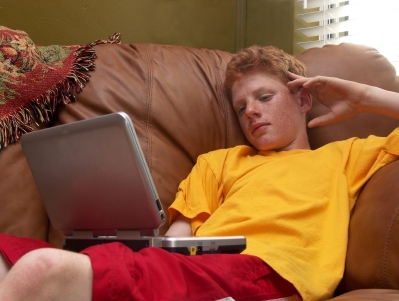
Significantly, the study found that those who engaged in less cognitive activity - ranging from complete cognitive rest to moderate cognitive rest all recovered at about the same pace.
"While vigorous cognitive exertion appears detrimental to recovery, more moderate levels of cognitive exertion do not seem to prolong recovery substantially," said William P. Meehan, III, MD, Director of the Sports Concussion Clinic at Boston Children's Hospital and one of the study's authors, similar to those in a 2008 study [13] which found that those who engaged in moderate levels of activity after concussion had better outcomes than those engaging in the highest and lowest levels of activity.
"This seems to suggest that while limiting cognitive activity is associated with a shorter duration of symptoms, complete abstinence from cognitive activity may be unnecessary," said Dr. Meehan.
Researchers suggested that cognitive activity may have more of an effect on recovery in the period immediately after injury, and said additional research would be needed to determine how the effect of cognitive activity changes over time.
"For the first three to five days, we tell our patients with concussions that they should really aim to be at a zero level or complete cognitive rest," said Meehan in an interview [4] with the Boston Globe. That means no reading, homework, text messaging, or video game playing; basically, it's fine to lie in bed quietly, watching TV or listening to music with the volume on low. Those experiencing severe symptoms may prefer to be resting anyway," he said, "but those with mild symptoms may think they can go back to school or resume exercise right away, which may delay their recovery."
After a few days, kids can slowly add mental activities such as doing a crossword puzzle or sending a few text messages to see how they feel. "If symptoms exacerbate, they should go back to resting," Meehan said. If they're feeling OK, they can continue to gradually add mental challenges, resuming some school work on a lighter schedule. Throughout, they should continue to assess their symptoms and cut back if the headaches or dizziness return.
Once physical symptoms clear, but before exercise is allowed, a gradual return to a full academic day can begin, with classroom accommodations [5].
At the Lawrenceville School, a New Jersey prep school, for instance, a concussed athlete must stay in the infirmary on "strict rest in a darkened room with no iPod, no computer, and no reading" until his or her physical symptoms of concussion [2] are at or close to their pre-injury baseline. At that point, he or she is gradually allowed to return to a full academic day, former Medical Director, Dr. Robin Karpf, told MomsTeam. "Their short-term memory and processing speed may continue to be off their baseline, but as long as they are not experiencing significant physical symptoms, I allow them back to the classroom with academic accommodations [5]." (An e-mail is sent to all the athlete's teachers with information on the possible need for such accommodations).
"We need to do more to educate teachers that adjustments may need to be made for a concussed athlete," Dr. Karpf said. Kids who don't get cognitive rest, she has found, are more likely to have concussion symptoms that linger longer.
If the increased cognitive challenges of the classroom bring about a recurrence of their physical symptoms, Dr. Karpf says, she returns them to rest. She does not start their gradual return to exercise or sports until they have returned to their neurocognitive baseline.
The 2014 study by Meehan, et al, [12] also provides data to support the practice of putting academic accommodations [6] [9,10] in place for student-athletes suffering sport-related concussions to allow for relative cognitive rest in a school setting, an important first step in the management of concussion. "Given our findings, it is likely that academic accomodations can speed the recovery process," the study says.
Neal McGrath, PhD, Director of the Sports Concussion Center New England, who was not involved in the study, said it "provides important findings that help more firmly establish what clinicians who work with concussion patients see on a daily basis: sufficient cognitive rest is crucial, both in getting recovery on track in the early days post-injury and in facilitating recovery as students re-engage with academic challenges and information processing demands in their everyday lives."
Dr. McGrath, the author of a seminal 2010 article in the Journal of Athletic Training on supporting the student-athlete's return to the classroom after a sport related concussion, [14] said that, "the data provide the most sophisticated glimpse yet of a phenomenon that has been easy to describe clinically but hard to quantify. The study's average duration of symptoms - 43 days - reminds us as well that concussion recovery is a process that often takes considerable time in the life of a young person."
A 2010 study of high school athletes with concussions [7] [3] reported that:
Experts nevertheless caution that, while an estimated 80 to 90% of concussions heal spontaneously in the first 7 to 10 days, children and adolescents may require a longer rest period and/or extended period of non-contact exercise than adults because their developing brains cause them to experience a different physiological response to concussion than adults and take longer to recover, and they have other specific risk factors, such as the risk of second impact syndrome [8].
A number of recent studies suggest that concussed adolescents, perhaps even more than younger and older athletes, take longer to recover full cognitive function and should be held out of play longer. One study [9] found that concussed adolescents have difficulty recovering the ability for high level thinking after injury and may require extended recuperation before full recovery of so-called 'executive function' is achieved, with researchers at the University of Oregon and University of British Columbia finding that executive function was disrupted in concussed adolescents for up to 2 months after injury when compared to healthy control subjects.[11]
In the absence of daily testing by a health care professional with concussion expertise (certified athletic trainer, school/team/primary care/sports medicine physician, neuropsychologist) to clear a student-athlete to begin the graduated return-to-play protocol, a student-athlete should observe a 7 day rest/recovery period before commencing the protocol. This means that, for such athletes, return to sports will take at least two weeks. Some leading concussion experts, including Dr. Rosemarie Scolaro Moser, a sports concussion neuropsychologist featured in the new PBS documentary, "The Smartest Team: Making High School Football Safer," [10] recommend taking a minimum of three weeks off before returning to sports after a concussion.
Younger students (K-8) should observe the 7 day rest/recovery period after they are symptom-free at rest prior to initiating the graduated-return-to play protocol.
As young athletes tend to consider only a small subset of their potential symptoms when reporting their recovery [11] or saying they are "back to normal" after concussion,[6] caution is urged in considering athletes' self-reported symptoms in their return-to-play decisions, and the same caution is warranted in relying solely on neurocognitive test scores having returned to normal before the graduated exercise protocol is begun.
Indeed, a recent study [12] [9] of concussed student-athletes who reported no symptoms and had returned to baseline on computerized neurocognitive tests taken before beginning the graduated exercise protocol, found that more than a quarter exhibited declines in verbal and visual memory on the tests after moderate exercise, prompting a recommendation that student-athletes not be cleared for full contact activity until they are able to demonstrate stability, particularly in memory functioning, on neurocognitive concussion testing performed after the exercise protocol is begun. While this was only one study, additional post-exercise neurocognitive testing may eventually become an important part of the RTP protocol.
In practical terms, this more conservative approach means that:
Return to play after concussion should follow a six-step process:
| Stage |
Activity | Objective |
| 1. No activity |
Symptom limited physical and cognitive (e.g. mental) rest (see above) |
Recovery |
| 2. Light aerobic exercise | Walking, swimming or stationary bicycle keeping intensity less than 70% of maximum predicted heart rate; no resistance training | Increase heart rate |
| 3. Sport-specific exercise | Skating drills in ice hockey, running drills in soccer. No head impact activities |
Add movement |
| 4. Non-contact training drills |
Progression to more complex training drills, e.g. passing drills in football and ice hockey; may start progressive resistance training | Exercise, coordination and use of brain |
| 5. Full contact practice |
Following medical clearance, participate in normal training activities |
Restore confidence [16] and allow coaching staff to assess functional skills |
| 6. Return to play |
Normal game play |
While many of the youth sports concussion safety laws [13] passed by the states in recent years contain broad language allowing any "qualified health care professional" to make the return-to-play decision, studies show that many primary care physicians [17] [10] lack the expertise required to make return to play decisions. Because they have more training and experience in concussion diagnosis and management, certified athletic trainers [18], team doctors, and neuropsychologists are usually the best qualified to decide when it is safe for an athlete to return to play.
 [19]
[19]
Generally, each step should take at least 24 hours, so that, assuming the athlete does not experience a reoccurrence of concussion symptoms at rest or with exercise as she progresses through the exercise program, she will be able to return to sports in about a week's time after symptoms have cleared.
If any post-concussion symptoms [2] occur at any level, the athlete needs to drop back to the previous level at which she was symptom-free, and try to progress again after a further 24-hour period of rest has passed.
The Model Policy and Guidance for Prevention and Treatment of Sports-Related Concussions and Head Injuries [20] recently issued by the New Jersey Department of Education pursuant to that state's concussion safety law [21] suggests that, in the absence of daily testing by a health care professional with concussion expertise (certified athletic trainer, school/team physician) to clear a student-athlete to begin the graduated return-to-play protocol:
In their desire to return to the playing field, some high school athletes fail to comply with return to play guidelines. A 2009 study [4] by researchers at Nationwide Children's Hospital in Columbus, Ohio found that at least 40.5% and 15.0% of athletes who sustained concussions returned to play prematurely under the now-outdated American Academy of Neurology (AAN) and then current Zurich return-to-play guidelines.
A 2011 study [7], [5] however, shows for the first time the important role computerized neuropsychological testing [23] is playing in concussion assessment and return to play decisions. Athletes who had taken a pre-season, baseline ImPACT computerized neuropsychological test, and took the ImPACT test again after suspected concussion were less likely to return to play on the same day, and less likely to return to play within a week of their injury, than the three out of four injured athletes who did not undergo such testing.
The authors suggested three possible reasons:
A 2013 study [12] [9] of concussed student-athletes who reported no symptoms [2] and had returned to baseline on computerized neurocognitive tests [25] taken before beginning the graduated return to sports protocol, found that more than a quarter (27.7%) exhibited declines in verbal and visual memory on the tests after moderate exercise.
The findings prompted the study's authors, led by sports concussion neuropsychologist Neal McGrath, Ph.D. of Sports Concussion New England, to recommend that neurocognitive testing become an "integral component of the athletic trainer's post-exertion evaluation protocol and that student-athletes should not be cleared for full contact activity until they are able to demonstrate stability, particularly in memory functioning, on such post-exertion neurocognitive concussion testing."
"Our thinking," said McGrath, "is that since exercise is known to cause recurrence of symptoms in some athletes who may not be fully recovered, and since neurocognitive testing has been shown to reveal persisting cognitive deficits in athletes who say or feel that they are symptom-free [11], [6] any significant decline in post-exercise cognitive test scores for those athletes who have reached the point of feeling fully symptom-free, with resting neurocognitive scores that are back to baseline, would indicate that more recovery time is needed before returning to contact sports action. We would follow those athletes until their post-exercise neurocognitive test scores remain stable at baseline levels before clearing them to return to play."
2. Halstead, M, Walter, K. Clinical Report - Sport-Related Concussion in Children and Adolescents. Pediatrics 2010;126(3):597-615.
3. Meehan W, d'Hemecourt P, Comstock D. High School Concussions in the 2008-2009 Academic Year: Mechanism, Symptoms, and Management. Am. J. Sports. Med. 2010; 38(12): 2405-2409 (accessed December 2, 2010 at http://ajs.sagepub.com/content/38/12/2405.abstract?etoc).
4. Yard EE, Comstock RD. Compliance with return to play guidelines following concussion in US high school athletes, 2005-2008. Brain Inj. 2009:23(11):888-98.
5. Lincoln A, Caswell S, Almquist J, Dunn R, Norris J, Hinton R. "Trends in Concussion Incidence in High School Sports: A Prospective 11-Year Study"Am. J. Sports Med.accessed January 31, 2011 @http://ajs.sagepub.com/content/early/2011/01/29/0363546510392326. [26]
6. Sandel N, Lovell M, Kegel N, Collins M, Kontos A. The Relationship Of Symptoms and Neurocognitive Performance to Perceived Recovery From Sports-Related Concussion Among Adolescent Athletes. Applied Neuropsychology 2012; DOI:10.1080/21622965.201 2.670680 (published online ahead of print 22 May 2012)(accessed June 5, 2012).
7. Moser RS, Glatts C, Schatz P. Efficacy of Immediate and Delayed Cognitive and Physical Rest for Treatment of Sport-Related Concussion. J Pediatrics DOI: 10.1016/j.jpeds.2012.04.012 (in press).
8. Majerske CW, Mihalik JP, Ren D, Collins MW, Reddy CC, Lovell MR. et al. Concussion in sports: postconcussive activity levels, symptoms, and neurocognitive performance. J Athl Tr. 2008;43:265-274.
9. McGrath N, Dinn WM, Collins MW, Lovell MR, Elbin RJ, Kontos AP. Post-exertion neurocognitive test failure among student-athletes following concussion. Brain Inj 2013;27(1):103-113.
10. Zonfrillo MR, Master CL, Grady MF, Winston FK, Callahan JM, Arbogast KB. Pediatric Providers' Self-Reported Knowledge, Practices, and Attitudes About Concussion. Pediatrics 2012;130(6). DOI: 10.1542/peds.2012-1431)(published online ahead of print)(accessed November 19, 2012)
11. Howell D, Osternig L, Van Donkelaar P, Mayer U, Chou L. Effects of Concussion on Attention and Executive Function in Adolescents. Med Sci Sports Exer. 2013;45(6):1023-1029.
12. Brown NJ, Mannix RC, O'Brien MJ, Gostine D, Collins MW, Meehan WP. Effect of Cognitive Activity Level on Duration of Post-Concussion Symptoms. Pediatrics 2014;133(2):1-6.
13. Majerske CW, Mihalik JP, Ren D, et al. Concussion in sport: postconcussive activity levels, symptoms, and neurcognitive performance. J Athl Tr. 2008;43(3):265-274.
14. McGrath N. Supporting the student-athlete's return to the classroom after a sport-related concussion. J Athl Train. 2010;45(5):492-498.
Most recently updated March 17, 2016
[26]


Links:
[1] https://fast.wistia.net/embed/iframe/lpehbzvnjg?autoPlay=true&controlsVisibleOnLoad=true&endVideoBehavior=reset&plugin[postRoll-v1][link]=http://wistia.com?default_cta=true&plugin[postRoll-v1][rewatch]=true&plugin[postRoll-v1][style][backgroundColor]=#616161&plugin[postRoll-v1][style][color]=#ebe9d9&plugin[postRoll-v1][style][fontFamily]=Gill Sans, Helvetica, Arial, sans-serif&plugin[postRoll-v1][style][fontSize]=36px&plugin[postRoll-v1][text]=THE SMARTEST TEAM-
Making High School Football Safer [Documentary]
Avail: Amazon, Vimeo (VOD),and on PBS stations Fall 2013
For more information, visit
www.thesmartestteam.com
www.MomsTEAM.com&plugin[socialbar-v1][buttons]=embed-email-twitter-reddit-tumblr-stumbleUpon-googlePlus-facebook&popover=true&version=v1&videoHeight=681&videoWidth=1210&volumeControl=true
[2] https://www.momsteam.com/node/149
[3] https://www.momsteam.com/cognitive-rest/full-cognitive-activity-after-concussion-delays-recovery-study-finds
[4] http://www.bostonglobe.com/lifestyle/health-wellness/2014/01/06/brain-rest-helps-kids-heal-faster-from-concussions/v9lysgKAts34VEejhEFSEN/story.html
[5] https://www.momsteam.com/node/3319
[6] https://www.momsteam.com/node/6780
[7] https://www.momsteam.com/node/3227
[8] https://www.momsteam.com/node/208
[9] https://www.momsteam.com/node/6174
[10] http://www.thesmartestteam.com
[11] https://www.momsteam.com/node/4924
[12] https://www.momsteam.com/node/5799
[13] https://www.momsteam.com/node/3015
[14] https://www.momsteam.com/node/2695
[15] https://www.momsteam.com/node/3314
[16] https://www.momsteam.com/node/2581
[17] https://www.momsteam.com/node/5590
[18] https://www.momsteam.com/node/114
[19] http://fast.wistia.com/embed/iframe/f9a82183b0?videoWidth=640&videoHeight=360&controlsVisibleOnLoad=true&autoPlay=true&popover=true&plugin[postRoll][version]=v1&plugin[postRoll][text]=For more youth sports concussion safety information, click here.&plugin[postRoll][link]=http://www.momsteam.com/health-safety/concussion-safety&plugin[postRoll][style][backgroundColor]=#030303&plugin[postRoll][style][color]=#4fa9f7&plugin[postRoll][style][fontSize]=36px&plugin[postRoll][style][fontFamily]=Gill Sans, Helvetica, Arial, sans-serif&plugin[socialbar][version]=v1&plugin[socialbar][buttons]=embed-email-twitter-googlePlus-facebook&plugin[socialbar][tweetText]=Athletic Trainer and Team Doctor Most Qualified To Make Return-to-Play Decision After Concussion
[20] http://www.nj.gov/education/aps/cccs/chpe/concussions/policy.pdf
[21] https://www.momsteam.com/node/3336
[22] https://www.momsteam.com/california/youth-sports-concussion-safety-laws-california
[23] https://www.momsteam.com/node/801
[24] https://www.momsteam.com/node/2987
[25] https://www.momsteam.com/node/3385
[26] http://ajs.sagepub.com/content/early/2011/01/29/0363546510392326.full.pdf html
[27] https://www.momsteam.com/users/meehanwpmd
[28] https://www.momsteam.com/health-safety/concussion-evaluation-management-return-to-play-decision-involves-many-factors
[29] https://www.momsteam.com/health-safety/return-to-sports-psychological-readiness-as-important-as-physical-readiness
[30] https://www.momsteam.com/health-safety/no-same-day-return-play-after-concussion
[31] https://www.momsteam.com/health-safety/concussion-signs-and-symptoms-physical-cognitive-emotional-sleep-related
[32] https://www.momsteam.com/health-safety/concussion-safety/recognition-evaluation/neuropsychological-testing-for-concussions
[33] https://www.momsteam.com/health-safety/young-athletes-self-assessment-concussion-recovery-unreliable-measure-return-play-readiness
[34] https://www.momsteam.com/health-safety/are-concussed-athletes-being-returned-play-while-still-cognitively-impaired
[35] https://www.momsteam.com/health-safety/effects-concussion-higher-cognitive-function-persist-in-teens-study-says